Texte · Peer-reviewed papers · Köhl & Altweger
Art Papers
Art-based research of tofukoma / Hybrid Systems Lab, Fachbereich Gestaltung, FHV — newest first
(Paper 01)Expanded 2026 · ACM
Doubleblind. Sensibilities of Extinction
Margarita Marie Köhl, David Emanuel Altweger
Department of Design, Vorarlberg University of Applied Sciences / FHV, Dornbirn, Vorarlberg, Austria (both authors)
- Venue
- Expanded 2026: Conference on Animation and Interactive Art, September 09–11, 2026, Linz, Austria. ACM, New York, NY, USA
- Year
- 2026
- Pages
- 4
- ISBN
- 979-8-4007-2865-5/2026/09
- DOI
- 10.1145/3840416.3840465 (not yet resolving on 2026-10-22)
- Licence
- CC BY-NC-ND 4.0 (as printed; © 2026 Copyright held by the owner/author(s))
- CCS
- Mixed / virtual reality → Arts and humanities; Digital libraries and archives
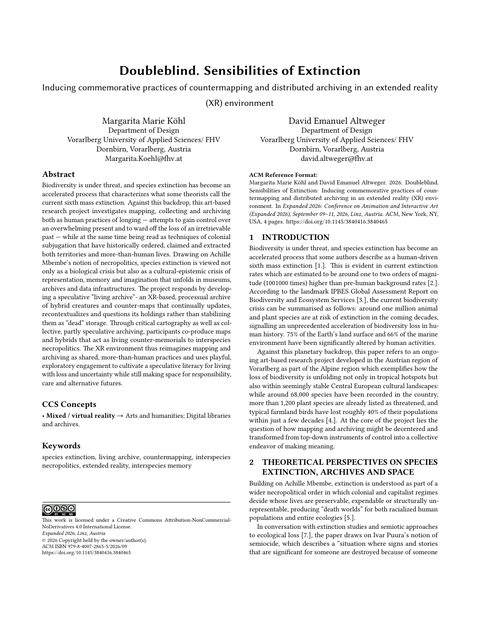
Inducing commemorative practices of countermapping and distributed archiving in an extended reality (XR) environment
(Abstract) [verified] read from the PDF, p. 1
Biodiversity is under threat, and species extinction has become an accelerated process that characterizes what some theorists call the current sixth mass extinction. Against this backdrop, this art-based research project investigates mapping, collecting and archiving both as human practices of longing — attempts to gain control over an overwhelming present and to ward off the loss of an irretrievable past — while at the same time being read as techniques of colonial subjugation that have historically ordered, claimed and extracted both territories and more-than-human lives. Drawing on Achille Mbembe’s notion of necropolitics, species extinction is viewed not only as a biological crisis but also as a cultural-epistemic crisis of representation, memory and imagination that unfolds in museums, archives and data infrastructures. The project responds by developing a speculative “living archive”- an XR-based, processual archive of hybrid creatures and counter-maps that continually updates, recontextualizes and questions its holdings rather than stabilizing them as “dead” storage. Through critical cartography as well as collective, partly speculative archiving, participants co-produce maps and hybrids that act as living counter-memorials to interspecies necropolitics. The XR environment thus reimagines mapping and archiving as shared, more-than-human practices and uses playful, exploratory engagement to cultivate a speculative literacy for living with loss and uncertainty while still making space for responsibility, care and alternative futures.
(Keywords) species extinction, living archive, countermapping, interspecies necropolitics, extended reality, interspecies memory
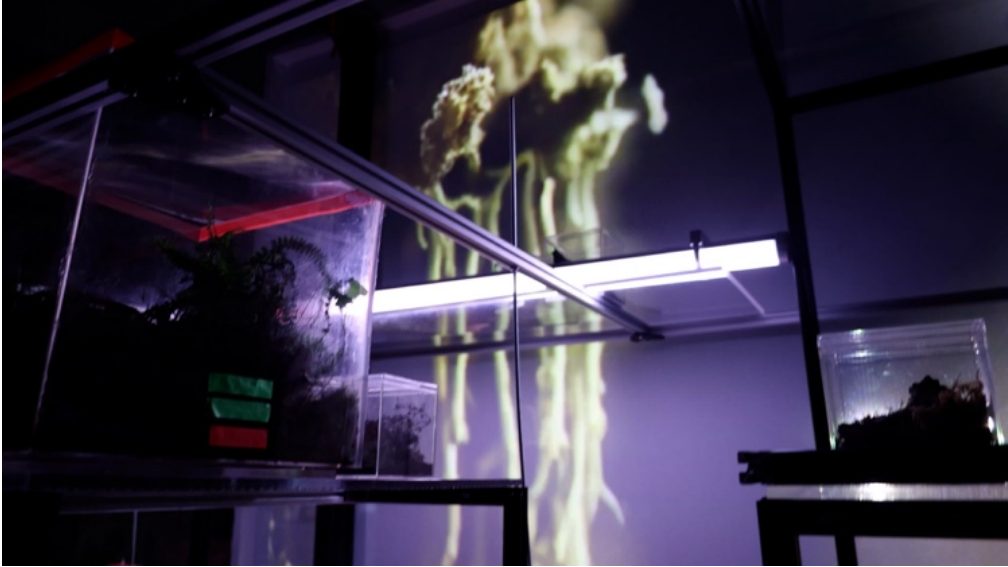
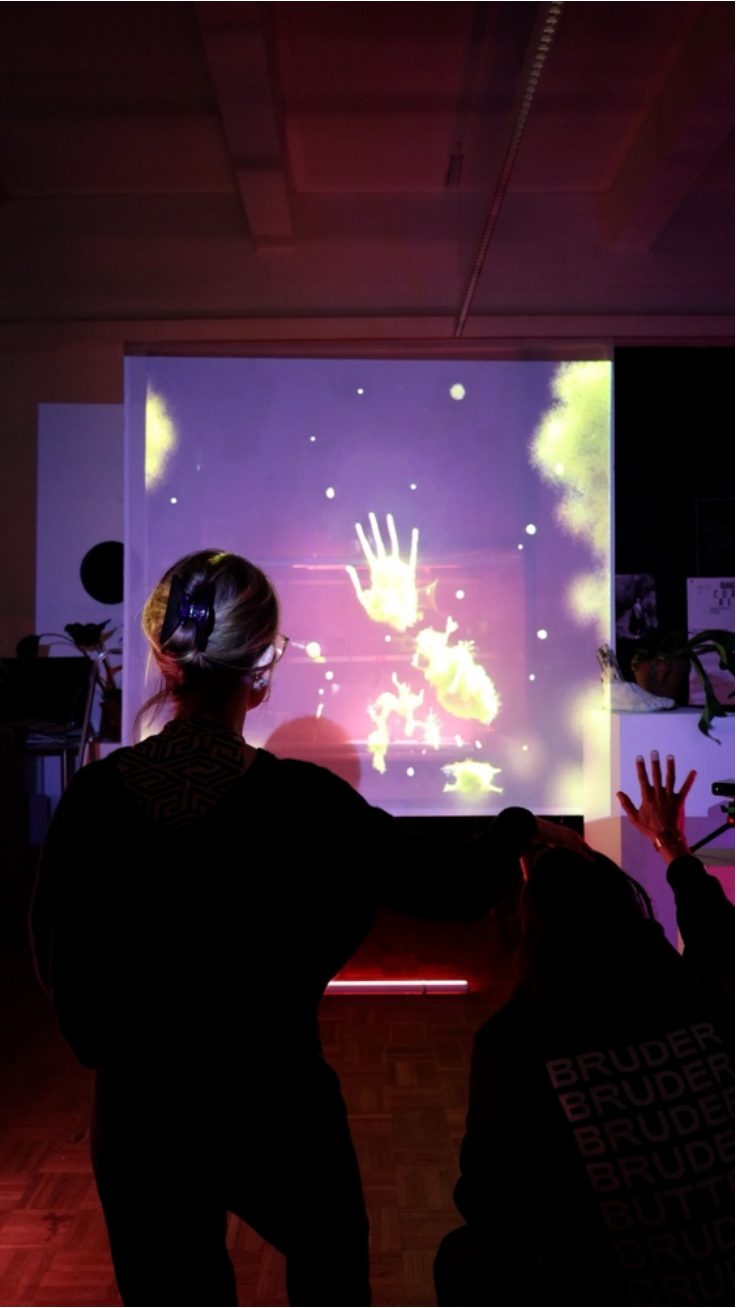
Doubleblind · p. 2 (01–02)
- Figure 1: Living archive in Hybrid Systems Lab.
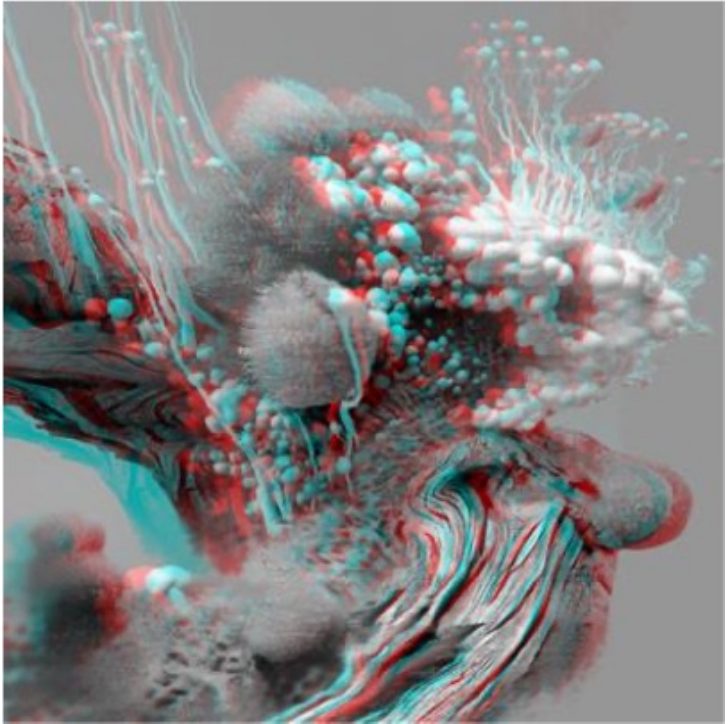
- Figure 2: live interaction with hybrid creatures
(Printed captions, verbatim)
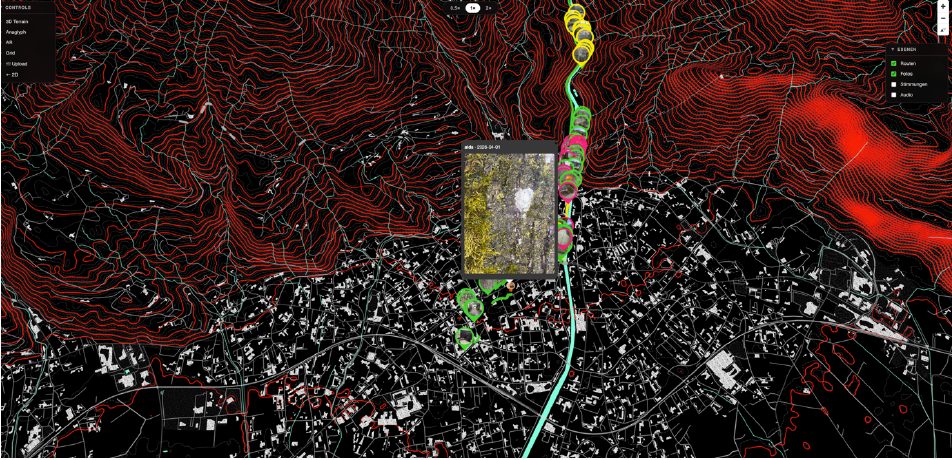
Doubleblind · p. 3 (03–04–05)
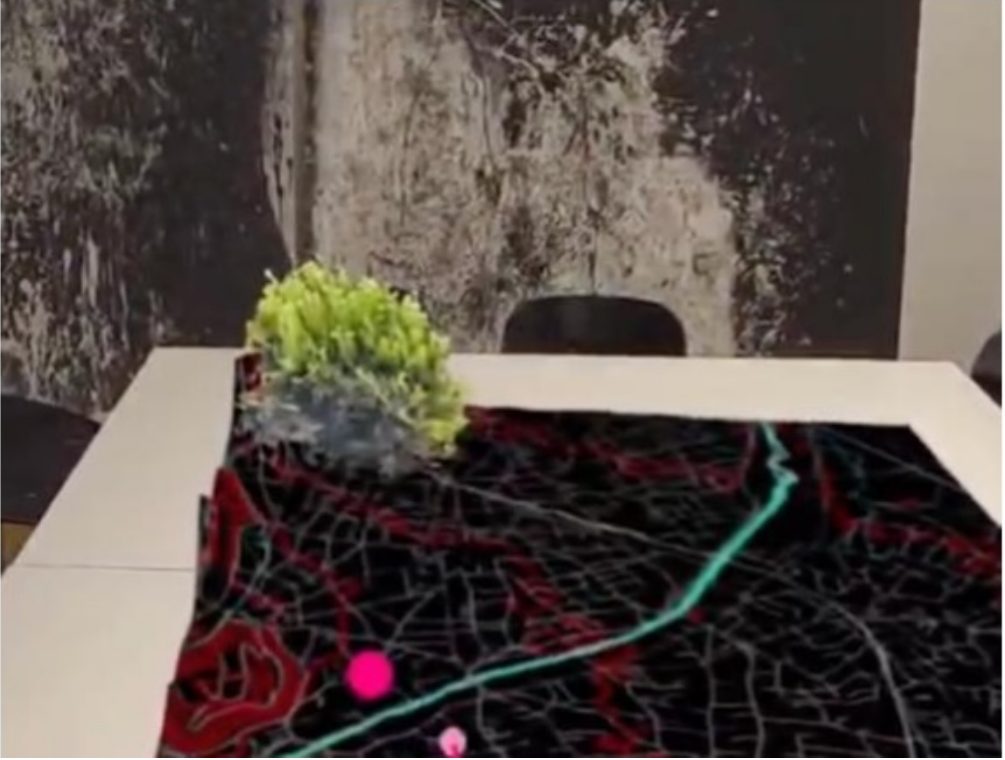
- Figure 3: interactive touchscreen map combining georeferenced datasets, 3D scans, Gaussian splats, audio, and drawn notes andprocedurallygenerated overlays.
- Figure 4: XR environment with depth-based spatial image, headset view
- Figure 5: Detail of AI based XR experience: Hybrid creatures
(Printed captions, verbatim)
(Paper 02)Expanded ’24 · Best Paper (Art Track)
Sphagnum Dances – Merging with Mosses
Margarita Köhl, David Altweger
Department of Design, Vorarlberg University of Applied Sciences, Dornbirn, Vorarlberg, Austria (both authors)
- Venue
- Extended Abstracts of the Expanded Animation Conference on Animation and Interactive Art (Expanded ’24), September 5–7, Linz, Austria
- Year
- 2024
- Pages
- 3
- Licence
- CC BY 4.0 (Zenodo record; no licence line printed in the PDF)
- Award
- Best Paper Award — Art Track, Expanded Animation Conference (Expanded ’24), Ars Electronica Festival, Linz, September 2024 [verified] FHV Magazine, 16.09.2024
Vegetal agency in distributed more-than-human choreographies
(Abstract) [verified] read from the PDF, p. 1
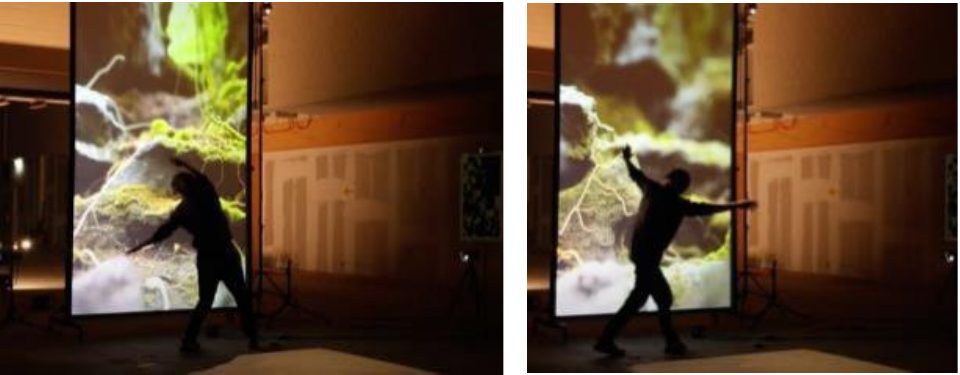
This paper refers to an ongoing interdisciplinary, art-based research project which aims to question the disembodied rationale of Western epistemology and related regimes of dominant knowledge by focusing on vegetal agency. Following the approach of “Plant Thinking”, sphagnum mosses become the protagonists in this endeavor, as they are to be considered as key regulators of peatland ecosystems resisting the severe consequences of anthropogenic interference such as desiccation. Informed by feminist posthumanism the project aims to transgress the distinction between subject and object by tracing the formation of configurations, where nature and culture construct each other. The project involves two mutually informative art-based strategies of inquiry which both use mimesis as a lens: Based on a period of gathering data via field experiments, interviews and walks with biologists, audiovisual research about peatland and mosses, a laboratory experience space was created which invites the audience to immerse themselves in a living archive of mosses. The second strategy of inquiry addresses the interaction between the audience and the specimens. This is made possible by using artificial intelligence models mediating between the audience and the biomes and communities, the mosses interact with. By training a number of specialized LORA models with the collected hundreds of images of biomes and specimens, we can prompt those AI models to turn participants into plants, fungi, soil and whole ecosystems that move along with them. The project invites to participate in seemingly rational practices of objectification such as collecting, inspecting, sorting and categorizing and juxtaposes them with seemingly affective practices of performance and dance. By activating the entire body to explore the dynamics of vegetal phenomena, the project critically approached the disembodied rationale of Western epistemology thereby exposing the dichotomy of human activity and plant passivity as a myth. The result is a distributed choreography involving human and more-than-human actors.
(Keywords) post-humanism, artificial intelligence, art-based research, ecosystems, performance, more-than-human choreographies
Sphagnum Dances · p. 2 (06)
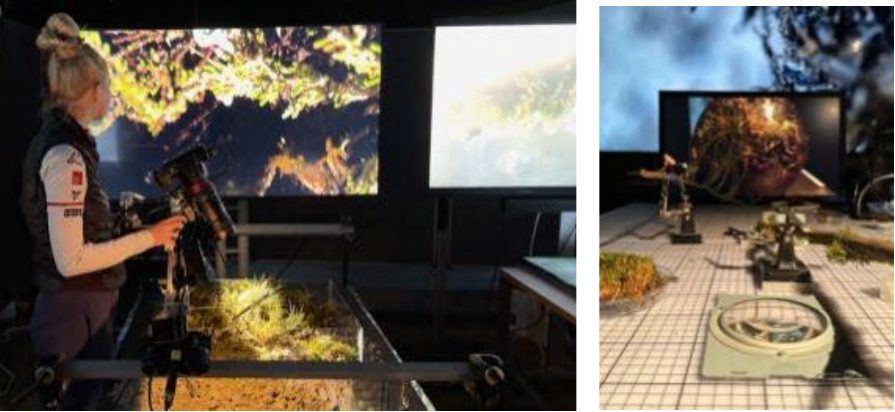
- Figure 1: Mimicking the laboratory: Techniques of zooming in and out enable participants to develop different perspectives on mosses.
(Printed captions, verbatim)
Sphagnum Dances · p. 3 (07)
- Figure 2: A participant’s movements in front of a large screen are tracked and mimicked by the AI models resulting in a performance.
(Printed captions, verbatim)
Texte · Begutachtete Beiträge · Köhl & Altweger
Art Papers
Künstlerische Forschung von tofukoma / Hybrid Systems Lab, Fachbereich Gestaltung, FHV – die neuesten zuerst
(Beitrag 01)Expanded 2026 · ACM
Doubleblind. Sensibilities of Extinction
Margarita Marie Köhl, David Emanuel Altweger
Fachbereich Gestaltung, Fachhochschule Vorarlberg / FHV, Dornbirn, Vorarlberg, Österreich (beide)
- Ort
- Expanded 2026: Conference on Animation and Interactive Art, September 09–11, 2026, Linz, Austria. ACM, New York, NY, USA
- Jahr
- 2026
- Seiten
- 4
- ISBN
- 979-8-4007-2865-5/2026/09
- DOI
- 10.1145/3840416.3840465 (am 2026-10-22 noch nicht auflösbar)
- Lizenz
- CC BY-NC-ND 4.0 (wie gedruckt; © 2026 Copyright held by the owner/author(s))
- CCS
- Mixed / virtual reality → Arts and humanities; Digital libraries and archives
Inducing commemorative practices of countermapping and distributed archiving in an extended reality (XR) environment
(Zum Beitrag)
Der Beitrag beschreibt ein künstlerisches Forschungsprojekt im Hybrid Systems Lab: ein lebendes Archiv aus hybriden Kreaturen und Gegenkarten in einer XR-Umgebung, das seine Bestände laufend neu ordnet, statt sie stillzulegen. Mit Achille Mbembes Begriff der Nekropolitik liest er das Artensterben auch als Krise der Darstellung, des Gedächtnisses und der Vorstellungskraft. Kartieren und Archivieren werden zu gemeinsamen, mehr-als-menschlichen Praktiken, die lernen, mit Verlust und Unsicherheit zu leben.
(Kurzfassung, englisch) [verifiziert] aus dem PDF gelesen, S. 1
Biodiversity is under threat, and species extinction has become an accelerated process that characterizes what some theorists call the current sixth mass extinction. Against this backdrop, this art-based research project investigates mapping, collecting and archiving both as human practices of longing — attempts to gain control over an overwhelming present and to ward off the loss of an irretrievable past — while at the same time being read as techniques of colonial subjugation that have historically ordered, claimed and extracted both territories and more-than-human lives. Drawing on Achille Mbembe’s notion of necropolitics, species extinction is viewed not only as a biological crisis but also as a cultural-epistemic crisis of representation, memory and imagination that unfolds in museums, archives and data infrastructures. The project responds by developing a speculative “living archive”- an XR-based, processual archive of hybrid creatures and counter-maps that continually updates, recontextualizes and questions its holdings rather than stabilizing them as “dead” storage. Through critical cartography as well as collective, partly speculative archiving, participants co-produce maps and hybrids that act as living counter-memorials to interspecies necropolitics. The XR environment thus reimagines mapping and archiving as shared, more-than-human practices and uses playful, exploratory engagement to cultivate a speculative literacy for living with loss and uncertainty while still making space for responsibility, care and alternative futures.
(Schlagwörter, englisch) species extinction, living archive, countermapping, interspecies necropolitics, extended reality, interspecies memory
Doubleblind · S. 2 (01–02)
- Figure 1: Living archive in Hybrid Systems Lab.
- Figure 2: live interaction with hybrid creatures
(Gedruckte Bildunterschriften, wörtlich)
Doubleblind · S. 3 (03–04–05)
- Figure 3: interactive touchscreen map combining georeferenced datasets, 3D scans, Gaussian splats, audio, and drawn notes andprocedurallygenerated overlays.
- Figure 4: XR environment with depth-based spatial image, headset view
- Figure 5: Detail of AI based XR experience: Hybrid creatures
(Gedruckte Bildunterschriften, wörtlich)
(Beitrag 02)Expanded ’24 · Best Paper (Art Track)
Sphagnum Dances – Merging with Mosses
Margarita Köhl, David Altweger
Fachbereich Gestaltung, Fachhochschule Vorarlberg, Dornbirn, Vorarlberg, Österreich (beide)
- Ort
- Extended Abstracts of the Expanded Animation Conference on Animation and Interactive Art (Expanded ’24), September 5–7, Linz, Austria
- Jahr
- 2024
- Seiten
- 3
- Eintrag
- zenodo.org/records/12792880
- Lizenz
- CC BY 4.0 (Zenodo-Eintrag; im PDF keine Lizenzzeile gedruckt)
- Auszeichnung
- Best Paper Award – Art Track, Expanded Animation Conference (Expanded ’24), Ars Electronica Festival, Linz, September 2024 [verifiziert] FHV Magazin, 16.09.2024
Vegetal agency in distributed more-than-human choreographies
(Zum Beitrag)
Der Beitrag macht Torfmoose (Sphagnum) zu Protagonisten einer künstlerischen Forschung, die das körperlose Denken der westlichen Erkenntnistheorie befragt. Ein Laborraum lädt in ein lebendes Archiv der Moose ein; KI-Modelle, trainiert mit Bildern von Biomen und Proben, verwandeln die Bewegungen der Teilnehmenden in Pflanzen, Pilze und Böden. Daraus entsteht eine verteilte Choreografie menschlicher und mehr-als-menschlicher Akteure.
(Kurzfassung, englisch) [verifiziert] aus dem PDF gelesen, S. 1
This paper refers to an ongoing interdisciplinary, art-based research project which aims to question the disembodied rationale of Western epistemology and related regimes of dominant knowledge by focusing on vegetal agency. Following the approach of “Plant Thinking”, sphagnum mosses become the protagonists in this endeavor, as they are to be considered as key regulators of peatland ecosystems resisting the severe consequences of anthropogenic interference such as desiccation. Informed by feminist posthumanism the project aims to transgress the distinction between subject and object by tracing the formation of configurations, where nature and culture construct each other. The project involves two mutually informative art-based strategies of inquiry which both use mimesis as a lens: Based on a period of gathering data via field experiments, interviews and walks with biologists, audiovisual research about peatland and mosses, a laboratory experience space was created which invites the audience to immerse themselves in a living archive of mosses. The second strategy of inquiry addresses the interaction between the audience and the specimens. This is made possible by using artificial intelligence models mediating between the audience and the biomes and communities, the mosses interact with. By training a number of specialized LORA models with the collected hundreds of images of biomes and specimens, we can prompt those AI models to turn participants into plants, fungi, soil and whole ecosystems that move along with them. The project invites to participate in seemingly rational practices of objectification such as collecting, inspecting, sorting and categorizing and juxtaposes them with seemingly affective practices of performance and dance. By activating the entire body to explore the dynamics of vegetal phenomena, the project critically approached the disembodied rationale of Western epistemology thereby exposing the dichotomy of human activity and plant passivity as a myth. The result is a distributed choreography involving human and more-than-human actors.
(Schlagwörter, englisch) post-humanism, artificial intelligence, art-based research, ecosystems, performance, more-than-human choreographies
Sphagnum Dances · S. 2 (06)
- Figure 1: Mimicking the laboratory: Techniques of zooming in and out enable participants to develop different perspectives on mosses.
(Gedruckte Bildunterschriften, wörtlich)
Sphagnum Dances · S. 3 (07)
- Figure 2: A participant’s movements in front of a large screen are tracked and mimicked by the AI models resulting in a performance.
(Gedruckte Bildunterschriften, wörtlich)
Read: The Estimating Image.
(design.hybridsystems.at/estimating-image.html)Lesen: Das schätzende Bild.
(design.hybridsystems.at/estimating-image.html)
 design.hybridsystems.at